
Products
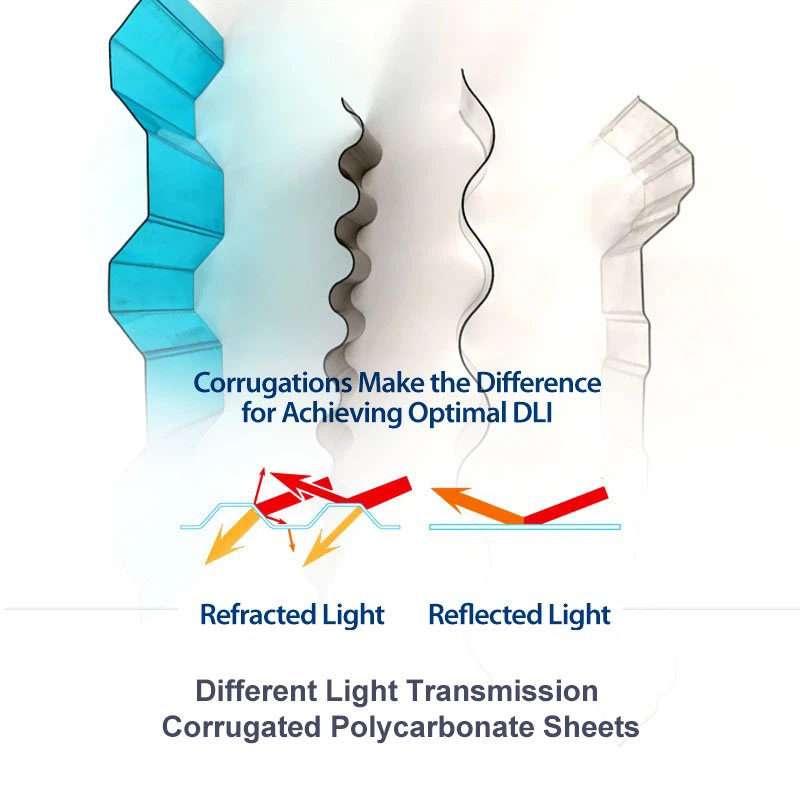


Custom Corrugated Polycarbonate Sheets for Roofing & Rooflights
Custom Corrugated Polycarbonate Sheets for Roofing & Rooflights
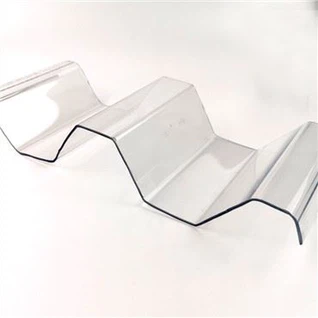
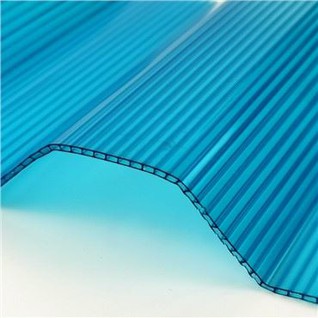
Corrugated polycarbonate sheets are profile-formed, translucent PC panels for roofing, rooflights, skylights, warehouse daylighting, greenhouses, canopies and covered walkways. UNQ offers more than 18 developed profiles and reviews each project for profile matching, effective cover width, light transmission and the UV-protected side before you order.
Every inquiry moves through a documented B2B path: drawing review, sample approval, batch production, inspection, export packing and shipping-document coordination.
Request a Profile Check & Quote Ask for Samples & Technical Documents

Profile-formed corrugated polycarbonate panels in a daylighting application.
What Are Corrugated Polycarbonate Sheets?
Corrugated polycarbonate sheets are single-wall PC panels formed into repeating waves or corrugations. They belong to the wider family of profiled polycarbonate sheets used wherever a roof or upper wall needs natural daylight without giving up weather protection. On project documents they may also be listed as corrugated polycarbonate roofing sheets, polycarbonate roof panels, rooflight panels or industrial rooflight panels; the names all describe the same profile-formed translucent product family.
The corrugation adds stiffness, so a comparatively thin sheet can span between purlins and resist wind and snow loads when the profile geometry, sheet thickness and support spacing are matched to the building. Because the panels are translucent, they turn a dark roof area into working daylight, which is why polycarbonate skylight panels and greenhouse roofing sheets are among the most common uses. UNQ supplies this series from a developed profile library of more than 18 corrugations and accepts review requests for a custom corrugated polycarbonate profile based on a customer drawing, a physical sample or a metal-roof reference.
Why Use Corrugated Polycarbonate Roofing Sheets for Roofing & Rooflights?
Four practical reasons explain why B2B buyers specify corrugated polycarbonate sheets for daylighting roofs.
Daylight Where It Is Needed
Translucent panels bring usable daylight into industrial rooflights, warehouse daylighting and covered walkways while the roof still keeps out rain and wind.
Metal-Roof Profile Integration
When corrugation pitch and wave depth line up with an installed metal roof, the sheets work as daylighting strips rather than requiring a separate roof-opening system.
Lightweight Handling
Compared with heavy opaque roof assemblies, single-wall PC panels are easier to transport, lift and place, which supports faster progress on large roof areas.
Project-Level Customization
Length, color, UV-protected side and packaging can be reviewed per order, suiting distributors with repeat programs and contractors with one-off roofs.
Corrugated Polycarbonate Sheet Specifications & Custom Options
Published values apply to the current UNQ corrugated series. Custom requirements are confirmed in writing before production.
| Product name | Corrugated polycarbonate roofing sheets |
| Material | Virgin polycarbonate resin |
| Developed profiles | More than 18 corrugated profiles; custom-profile review available |
| Thickness | 0.8–2.5 mm for the current published series; other ranges subject to profile and production review |
| Length | 5800 / 6000 / 11800 / 12000 mm or customized; confirm transport and container-loading limits |
| Colors | Clear, blue, green, bronze, opal / milky white, tawny; custom color subject to review |
| UV protection | Co-extruded UV-protection options; confirm the specification and the UV-protected side |
| Warranty | Written warranty options are available; terms confirmed for the ordered grade, installation and market |
| Service | Online technical support and 24-hour after-sales service |
| Standard custom lead time | Typically 15–20 business days after order confirmation; the final schedule must be confirmed in writing |
| Documentation | Technical data, test reports and market-specific document packages on request |
Profile Matching & Effective Cover Width
Two widths matter when corrugated polycarbonate sheets are laid on a roof. The overall width is the full manufactured width of one sheet from the outside of the first corrugation to the outside of the last. The effective cover width is the width one sheet actually covers once it side-laps the neighbouring sheet; the difference between the two figures is the width lost to the overlap. Roof coverage math should use the effective cover width, checked against the profile drawing.
Side-lap and end-lap geometry belongs to each specific profile, so UNQ recommends a profile-matching review before quantities or tooling are confirmed. A custom corrugated polycarbonate profile is always evaluated against your reference, never assumed from a photo alone.
For buyers comparing custom polycarbonate roofing sheets from different suppliers, a drawing-based review is what separates a matched profile from an approximation.
Send for a profile check
- A dimensioned 2D profile drawing, or a DXF / DWG / STEP / STL file;
- The metal roofing profile name and manufacturer reference;
- An end-view photo with pitch, depth and width measurements;
- A physical metal-sheet sample when precise matching is needed;
- Your target overall width and effective cover width.
UNQ confirms before quoting
- Corrugation pitch and wave depth;
- Overall width, effective cover width and overlap;
- Sheet direction and UV-protected side;
- Fastener and washer compatibility;
- Thermal-expansion allowance and roof slope.
Clear vs. Opal vs. Tinted: Choosing Light Transmission
The right option balances daylight, glare, privacy, appearance and solar-heat goals. Color, thickness, profile and surface treatment all change the optical result, so selection should start from the application rather than from a single transmission figure.
| Option | Selection goal | Common applications | What to confirm |
|---|---|---|---|
| Clear | Maximum natural daylight and visibility | Greenhouses, warehouse skylights, industrial daylighting | Tested light transmission for the selected thickness and profile |
| Opal / Milky White | Diffused light and reduced direct glare | Industrial roofing, walkways, commercial canopies | Transmission, diffusion level and lighting target |
| Bronze / Tawny | Lower brightness and a warmer appearance | Canopies, patios, architectural roofing | Approved color sample and heat conditions |
| Blue / Green | Regional demand or project appearance | Agricultural, commercial and selected roofing | Batch color standard and sample approval |
| Custom Color | Private-label or project requirements | Distributor programs and branded projects | Color reference, order size, lead time and tolerance |
Applications: From Industrial Rooflights to Greenhouse Roofing Sheets
Corrugated polycarbonate sheets serve four common project groups; the profile, color and support conditions are confirmed per application.
Industrial Rooflights
Polycarbonate rooflight panels and daylighting strips integrated with metal roof systems in factories and warehouses.
Warehouse Daylighting Panels
Clear or opal runs that lift light levels in storage aisles and reduce reliance on artificial lighting during working hours.
Greenhouse Roofing Sheets
Clear, diffused or colored panels selected for crop-light, glare and climate targets; anti-fog needs are stated in the inquiry.
Canopies & Walkways
Lightweight weather protection for carports, covered walkways, loading canopies and outdoor seating areas.
How to Choose Corrugated Polycarbonate Sheets in Nine Steps
- 1Start from the application. Rooflight strips, greenhouse roofing and canopies place different demands on light, strength and appearance.
- 2Match the profile first. Corrugation pitch and wave depth must suit the supporting structure or the metal roof you are integrating with.
- 3Calculate with effective cover width. Convert the roof width into sheet quantities using the effective cover width, not the overall width.
- 4Set the thickness. Confirm that the selected profile and thickness suit purlin spacing, slope and local loads.
- 5Pick color and daylight target. Clear, opal, bronze, blue, green or custom color, and state whether you want glare control.
- 6Confirm the UV-protected side. One side carries the UV layer and normally faces the sun; confirm it in the drawing review.
- 7Check roof pitch and purlin spacing. These two figures govern overlap, fixing pattern and sheet stiffness.
- 8List local loads. Wind, snow, hail exposure and any building-code requirements affect the final specification.
- 9Fix length, transport and samples. Choose stock or custom lengths, confirm loading limits, and approve a sample before mass production.
Installation Essentials: UV Side, Overlap & Thermal Expansion
The principles below are general guidance for profile-formed polycarbonate roofing. The sheet-specific installation guide and a qualified engineer always take precedence for your roof.
- UV side faces the sun. Install with the UV-protected side on the exterior and confirm which side is protected before fixing.
- Corrugations run down the slope. Lay sheets so water follows the profile toward the eaves without pooling.
- Respect the approved pitch and overlap. Minimum roof pitch, side-lap and end-lap values come from the profile drawing and guide.
- Allow for thermal expansion. Polycarbonate moves with temperature; use the recommended clearance and fixing layout instead of forcing sheets rigid.
- Do not overtighten fasteners. Fasten snugly with the recommended washer so the sheet can move without stress.
- Use compatible washers and sealants. Ask for the fastening and sealing package recommended for the profile.
- Do not walk directly on unsupported sheet. Walk on purlins or fitted walk boards; use the marked fixing positions.
- Cut with care. Use a fine-tooth blade or shears, support the sheet, and remove swarf before installation.
Corrugated vs. Multiwall vs. Metal Roof Panels
Each material family suits different project priorities. This comparison explains the practical differences so the choice is made against your brief, not a brand claim.
| Consideration | Corrugated PC | Multiwall PC | Metal roof panels |
|---|---|---|---|
| Daylight | Translucent single wall with color and opal options | Translucent with internal air channels and diffuse light | Normally opaque; daylighting needs separate rooflights |
| Profile & integration | Wave profile; can be matched to metal roof corrugations | Flat rigid panels with caps and framing | Full range of metal profiles and flashings |
| Thermal behaviour | Single-wall; performance depends on the roof build-up | Air channels add insulation value | Performance depends on insulation build-up |
| Handling | Lightweight rolls or sheets; easy to cut and lift | Panels with channels; moderate weight | Heavier; strong spanning capability |
| Typical use | Rooflights, industrial daylighting, greenhouses, canopies | Skylights, glazing, controlled daylight | Full roof cladding where opacity is acceptable |
Quality Control & Documentation
Quality checks on corrugated polycarbonate sheet orders cover thickness, length, profile geometry, color consistency, the UV-protected side, surface condition and packing condition. Checks are recorded against the order so the delivered batch can be traced.
Depending on the product and destination, buyers may request:
- Technical data sheet;
- Product-specific test reports;
- Quality-management certification documents;
- Applicable conformity documentation for the destination market;
- UV, impact or fire-performance reports where available;
- Packing list, loading plan and inspection records.

Quality and qualification documents are provided according to the product and order.
Manufacturing & Project Support
UNQ is operated by Hebei Unique Plastics Manufacturer Co., Ltd. The PC-sheet team brings more than 20 years of industry experience, and the company knowledge base records a manufacturing site in Dingzhou, Hebei, covering approximately 23,000 m².
Project orders follow a short, traceable workflow:
- 1Requirement review - application, destination, profile, dimensions, color and quantity;
- 2Profile matching - stock profile selection or custom-tooling feasibility;
- 3Sample approval - profile, color and key specifications before mass production;
- 4Production tracking - progress reported through material, production, inspection, packing and loading;
- 5Inspection - factory records and third-party pre-shipment inspection subject to order terms;
- 6Export coordination - packing, labels, shipping documents and loading plans aligned to the destination.

Production and quality control for corrugated polycarbonate sheet orders.
Engineering Experience
Across its wider PC-sheet and daylighting portfolio, UNQ has supplied projects in industrial manufacturing, energy, construction materials, agricultural research, commercial property and overseas hospitality. Documented records include a hotel rooftop daylighting project in Mauritius, a commercial and industrial daylighting package in Costa Rica, a supermarket daylighting project in Indonesia, and domestic cooperation with automotive, energy, building-material and agricultural-research organizations.
Corrugated Polycarbonate Sheet FAQ
They are single-wall polycarbonate panels formed into waves or corrugations for roofing, rooflights and daylighting. The profile adds stiffness so sheets can span between supports while letting natural light pass.
Common uses include industrial rooflights, warehouse daylighting, polycarbonate skylight panels, greenhouse roofing sheets, canopies, covered walkways and carports. The profile, thickness and color are matched to each application.
UNQ has more than 18 developed profiles and evaluates custom requests against a drawing, end-view photo, profile reference or physical sample. Pitch, wave depth, cover width and overlap are reviewed before production.
Overall width is the full manufactured width of one sheet; effective cover width is what one sheet covers after side-lapping its neighbour. Use the effective cover width when calculating how many sheets a roof needs.
The current UNQ series is published at 0.8–2.5 mm. Final thickness depends on purlin spacing, roof slope, wind and snow loads and the profile geometry, so it is confirmed during the profile review.
Choose clear for maximum daylight, opal or milky white to diffuse light and cut glare, and bronze, blue, green or other tints for appearance and lower brightness. Confirm the final choice with an approved sample and optical data for that exact configuration.
The UV-protected side normally faces the sun and exterior. The protected side is confirmed during order review and marked in the installation guide for the specific order.
Minimum pitch is tied to the profile and overlap and is stated in the profile-specific installation guide. Very low slopes need larger overlaps or different drainage details, so always follow the guide for the ordered profile.
Overlap figures belong to each profile drawing and installation guide. They depend on corrugation pitch, slope and local weather, and are confirmed during profile matching rather than guessed on site.
Polycarbonate expands and contracts with temperature, so sheets should not be forced rigid. Use the recommended washer package, fix snugly without overtightening, and follow the sheet-specific fixing pattern.
Use a fine-tooth circular blade or power shears, support the sheet along the cut, and remove swarf after cutting. Follow the installation guide for the ordered profile and thickness.
Do not walk directly on unsupported sheet areas. Walk on purlins, supports or fitted walk boards, and keep to the marked fixing positions.
Corrugated PC is a translucent single-wall option that can match metal roof lines; multiwall PC adds air-channel insulation; metal panels are opaque with strong spanning capability. The right choice depends on daylight, thermal and structural targets for the project.
Yes. The current series supports 5800 / 6000 / 11800 / 12000 mm or customized lengths, and colors including clear, opal, bronze, blue, green and tawny. Custom color, private label and packaging are reviewed per order with lead time confirmed in writing.
Send the application and destination, profile drawing or sample, corrugation pitch and wave height, overall and effective cover width, thickness, length, color or daylight target, roof pitch and purlin spacing, local loads, quantity and packaging requirements.
Hot Tags: Custom Corrugated Polycarbonate Sheets for Roofing & Rooflights, China, suppliers, manufacturers, factory, custom, wholesale, buy, in stock, corrugated plastic greenhouse panels, Polycarbonate Corrugated roofing sheet, polycarbonate roof panels 12 ft, polycarbonate or corrugated roof panels, clear polycarbonate roof panels, Impact Resistance Clear Storm Panel