

The use of a reasonable polycarbonate panel greenhouse structure can reduce heat loss. From the thermal energy balance of the polycarbonate panel greenhouse, it can be seen that in order to maintain a different environment in the greenhouse from the outside, you must rely on a complete enclosure structure to save the greenhouse space. Isolate it from the external environment and prevent the heat exchange inside and outside well. It is the structure of the polycarbonate panel greenhouse that accomplishes this function. Therefore, the difference in greenhouse structure plays a decisive role in the heat preservation and heat dissipation of the greenhouse.
The choice of light-transmitting covering material: Light-transmitting covering material is the most important part of the greenhouse, and it occupies the largest share of the isolation surface area. The flow and exchange of energy (light, heat) and substances (water, gas, fertilizer, etc.) between the inside and outside of the greenhouse all depend on the performance of the light-transmitting covering material. In addition to considering the service life, mechanical properties and economy of the covering material, the main consideration should be its light transmittance and heat preservation performance.
From the perspective of energy saving, the better the thermal insulation performance of the covering material, the greater its energy-saving potential; the better the light transmission performance, the higher the efficiency of using natural light. Covering materials are divided into four categories: flexible film, hard film, glass and hard plastic board.
The light transmission performance of the first two materials is very good, but the thermal insulation performance is poor. Glass and rigid plastic panels have better thermal insulation performance, especially rigid plastic panels represented by polycarbonate (PC sunshine board) panels have the best thermal insulation performance. However, it should be noted that there are often contradictions between the light transmission performance and thermal insulation performance of the covering material. It is often the material with good light transmission performance but poor thermal insulation performance. Therefore, it is more difficult to choose a material with both light transmission and high thermal insulation.
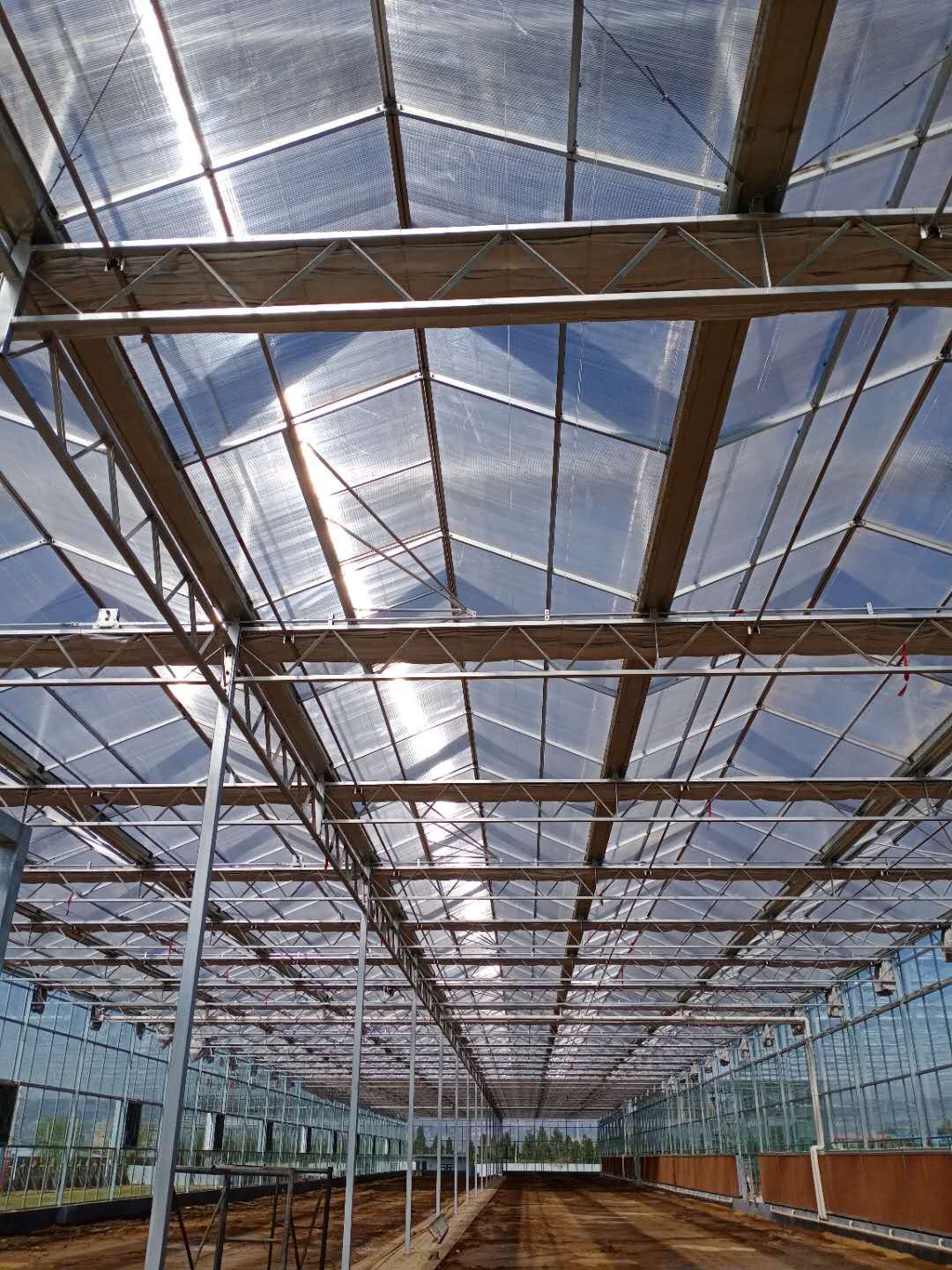
In addition, in winter in cold regions, the performance of a single single-layer covering material is difficult to meet the energy-saving requirements, and single-layer and multiple-layer covering materials can often achieve ideal heat preservation and energy-saving effects. For example, the multi-layer PC solar panel produced by increasing the number of air interlayers inside the enclosure material greatly improves the thermal insulation performance. As the number of layers of commonly used covering materials increases, the thermal insulation performance changes. Obviously, although the multi-layer covering material is good for heat preservation, it also reduces the amount of heat obtained from the sun due to poor light transmission. Therefore, the prerequisite for the use of multi-layer heat preservation materials is to meet sufficient light transmission. It can be seen that this energy-saving method is not feasible everywhere and at all times. Different covering materials have different thermal insulation properties. In the case of a certain covering material, although changing the form of the skeleton structure can not improve the thermal insulation performance, it can improve the light transmission performance. For example, the use of large blocks of light-transmitting materials and the adoption of fewer columns and small columns can increase the total heat entering the greenhouse and also improve the energy-saving effect.
For ordinary solar greenhouses in cold regions, if the north wall is only load-bearing and does not require light transmission, the use of a high thermal resistance north wall structure can often significantly improve the thermal insulation performance of the solar panel greenhouse and achieve good energy-saving effects. For example, the night temperature in a greenhouse with a heterogeneous composite wall is about 3°C higher than the night temperature in a greenhouse with a single-material wall. The final way to improve the performance of covering materials is to develop and develop new materials.
At present, there are light environment adjustment covering materials and temperature environment adjustment covering materials that can be developed. The former includes light conversion covering materials and photochromic covering materials; the latter includes infrared absorptive (used to suppress high temperatures in summer) and infrared reflective (used to keep warm in winter) covering materials and thermochromic polymer materials.


